
Patterns in Flux
Chess, Creativity and Constraint

Chess is a game of logic, it has fixed rules, a limited board, and often a punched clock. It appears to be the opposite of creative freedom, but it’s within these limits that imagination gains the capability of flourishing. The sixty-four squares become a landscape of infinite possibility.
I think I fell in love with chess not only for the challenge, or the adrenaline rush, but because, when playing a game, it feels somewhat akin to composing, or perhaps more like performing music. The feeling of creative achievement is instant.
We tend to imagine creativity to be reserved for the arts - music, painting, poetry - forms where expression appears to be free and boundless. This, I think, is a misjudgement. Creativity is not only for the page, the studio or the stage, nor for a specific type of person, it is there beneath the surface in almost every field of work/play. Everyone is creative. Without it, science would be mere data, sport a mindless routine of repetition, cuisine or fashion a matter of mere formula, music a lifeless ordering of tones. Without creativity, chess would be nothing more than a sequence of calculations or moves.
Creativity does not thrive in the absence of limitation but because of it. As Kant suggested, imagination creates a second nature from what is there - it bends rules not by breaking them, but by visualising unforeseen paths through them. The chessboard, with its rigid geometry and unchangeable laws, becomes an arena for disciplined imagination. For creativity.
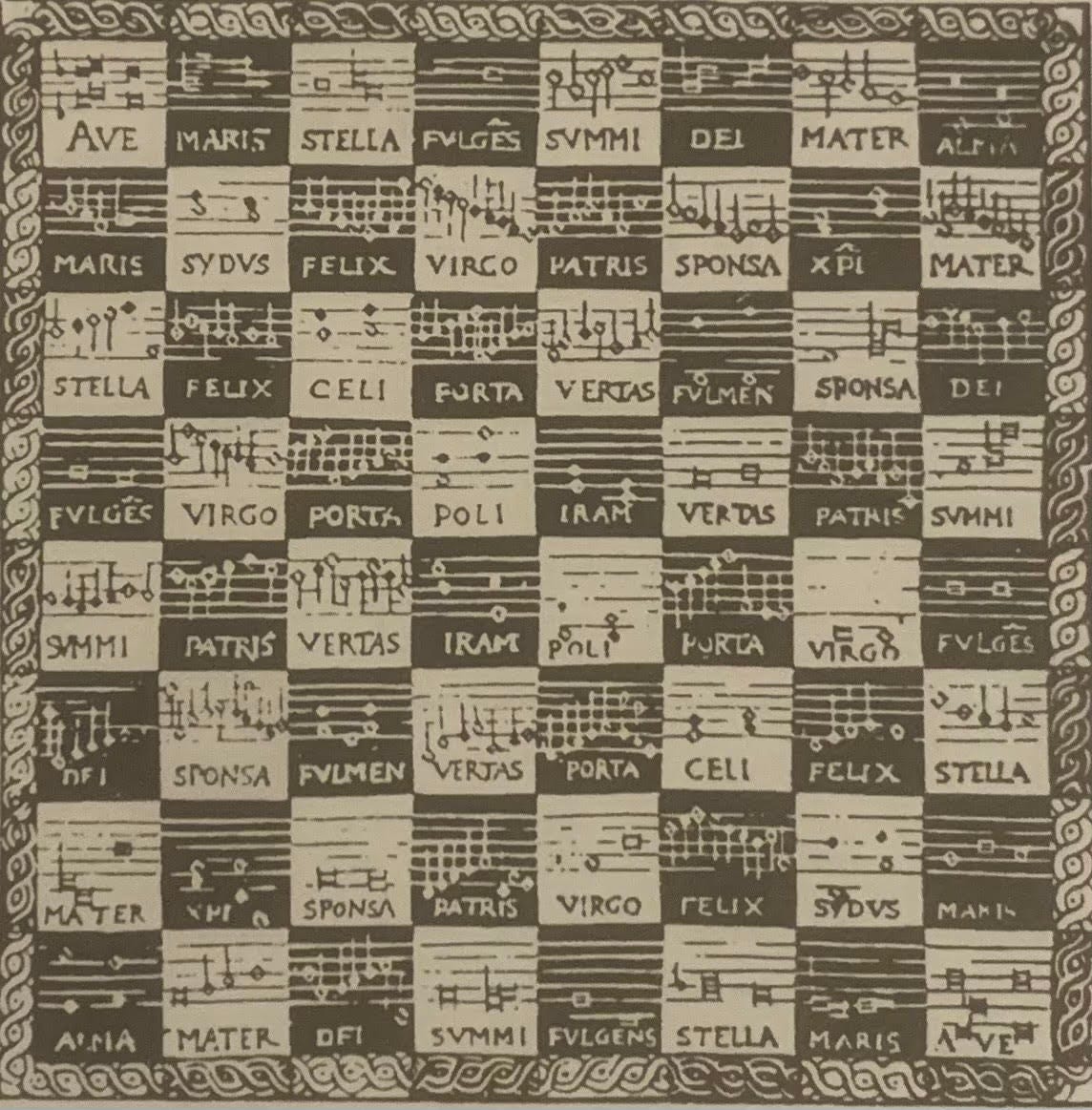
The French writer Raymond Queneau, co-founder of Oulipo, once described the group of poets and mathematicians as “rats who construct the labyrinth from which they plan to escape.” The image paints a picture of the paradox at the heart of all creative work - constraint is not the prison-guard of freedom but its route to breakout. Oulipo’s strict rules - lipograms, mathematical sequences, word games - did not restrict their invention, they produced it. Without the labyrinth there could be no possibility of escape.
Chess belongs to this same lineage. Each player, like an Oulipian poet, constructs their route through a system of limitations, seeking freedom not by ignoring rules, but by using them to their advantage, and ultimately, by attempting to master them. The board is both prison and playground - a grid that paradoxically allows for endless variation.
Every art form has similar boundaries. The painter is confined by the canvas, the musician (western at least) by the twelve tones, the poet by metre, rhyme and form, the architect by physics. Every act is limited by the rules and context in which it is performed. Structure doesn’t suffocate expression, it gives it shape. Without constraint, there would be no originality. There would be no art.
-
Picture in your mind the culturally-stereotyped chess player - bespectacled, socially awkward, middle-aged – someone who is logical, intellectual, analytically minded. Restrained. Then picture the stereotypical ‘creative’ – an epithet which leaves a sour taste in the mouth whenever uttered – a colourful, spontaneous, emotional character. Chaotic. Unpredictable. Free-thinking.
Stereotypes are oversimplifications - moulds that attempt to describe a character, or a trait of something or someone – clichés that are usually binary in nature. These caricatures mirror a familiar bifurcation between logic and imagination. This crossroad does not exist. Life is full of nuance. Creativity is not the opposite of logic - it is logic in motion. It is problem-solving mixed with intuition.
Neuroscientist and philosopher Iain McGilchrist helps to negate this binary in ‘The Master and His Emissary’ where he describes how the brain’s right hemisphere uses ‘breadth and flexibility of attention” seeing things as a whole and in context, while the left focuses on specific details. The right hemisphere (generally associated with creativity) is in fact the source of understanding and problem-solving in its truest sense, ‘seeing’ the bigger picture, the gestalt, whereas the left hemisphere is a useful tool, an emissary serving its neighbour, better suited at analysing and categorising what is known, rather than what is unknown.
In chess, as it is with most situations in life, these modes of thought and action work together. The right hemisphere reads the board as a living system - the flow of pieces, the tension - while the left calculates tactics and sequences. Creativity arises when both modes are engaged, when the player sees something that isn’t yet visible. It is a meeting of minds, of precision and intuition.
-
“The right hemisphere sees the world as a web of interrelated patterns, constantly in flux … ” says McGilchrist. Pattern recognition might not scream ‘creativity!’, but it happens to lie at creativity’s core. To see a pattern is to notice a connection, a movement, not only repetition. Chess is, in a sense, a living pattern. The chessboard is not a lifeless, static arrangement of pieces, it is when not played, of course, but when a conscious mind (or two) engage in a game of chess, the pieces and their relationships become dynamic in nature.
The chess player does not only apply basic patterns, they alter them and allow them to evolve. Each recognition becomes a connection in an endlessly evolving web of opportunity, what Deleuze would call becoming - “Repetition is not generality … repetition is difference without a concept.” A pattern in chess is never truly repeated, it is re-created through the player’s unique attention in that moment. It is a Heraclitean pursuit.
The act of recognising a pattern is not just mechanically recalling what to do next, or analysing what might happen, it is where meaning is generated. The process is somewhat akin to jazz improvisation where endless options are available within a relatively rigid structure, favouring intuition over calculation. And it all happens in real time. It is the practice of making the familiar strange again.
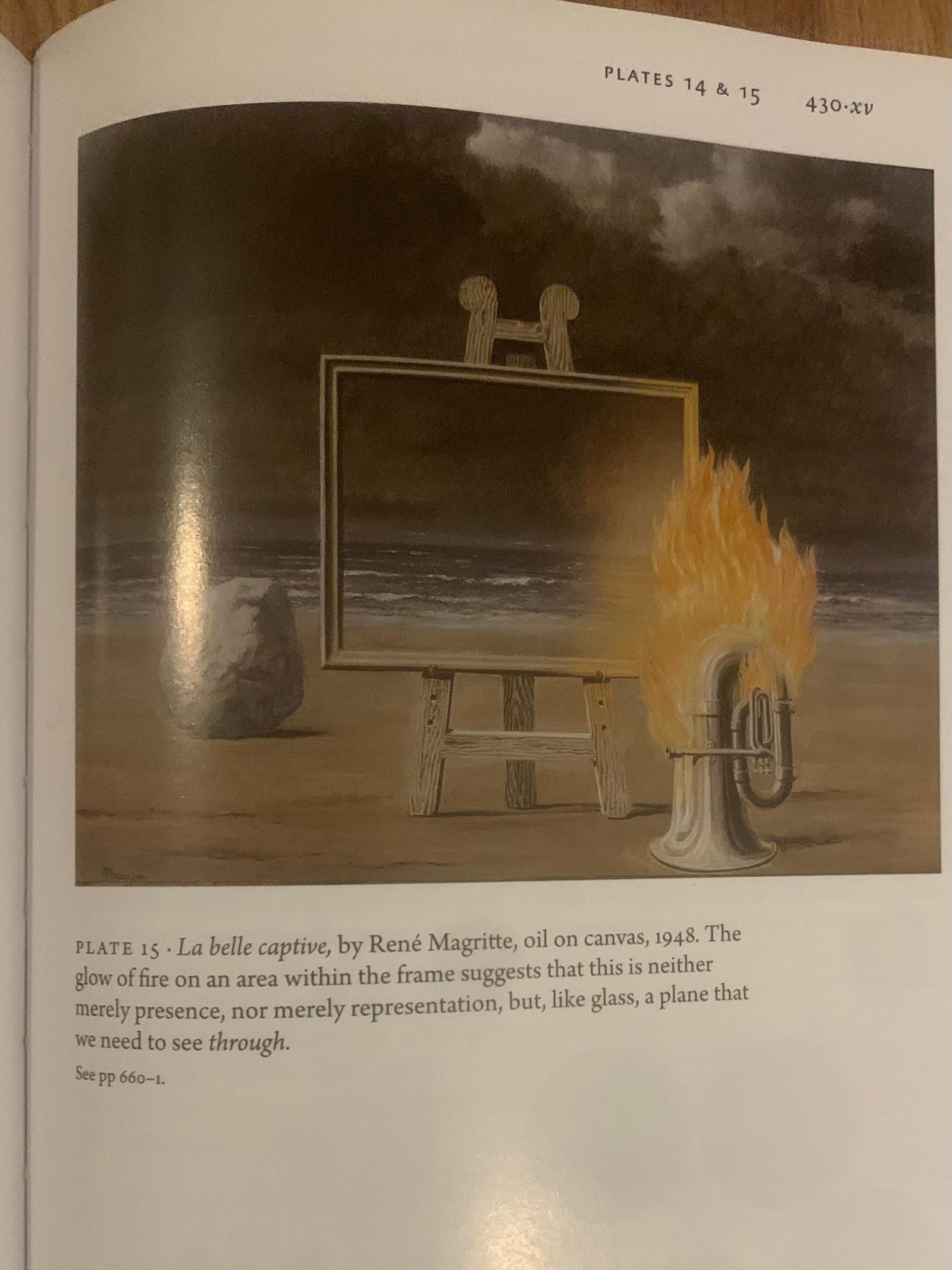
Creativity, I would argue, does not emerge entirely from the mind, nor entirely from the void, it comes from both intuition and a learned familiarity with form.
When writing music, and this is a bit of a cliché, it feels as if I’m not the thing itself writing, it feels as if the song emerges from somewhere else, but not the void alone - only through collaboration with it. The songwriter, footballer, poet, chess player, are each limited by the structures within which they can work/play, they are each constrained by time and space, and each must have an open attention. Their awareness must be receptive. There is an intuition in the moment that can recognise patterns and make decisions without the subject necessarily being conscious of making of those decisions, but this foresight can only arrive through practice and experience in that particular form or structure.
Perhaps pattern recognition is not the opposite of imagination but the ember to its fire. The human mind, through years of evolution, has learned to internalise the forms of a place or event until they become intrinsically naturalised. Like a map. The critically-minded conscious and the mysteriously intuitive unconscious must collaborate in the act of play. The experienced chess player feels the board, their creativity is not algorithmic, but phenomenological, or so it would appear.
But what happens when it is not only animals or humans that can recognise patterns? If the essence of creativity lies in recombination and emergence within constraints, can an artificial system be truly creative?
When ‘AlphaZero’ played its first games of chess, onlookers described its style as intuitive and imaginative. For something to have intuition and imagination, it would need to have awareness or cognition as a prerequisite, you’d think, and DeepMind’s AlphaZero, as far as I’m concerned, has none of the sort and furthermore will never have the capacity to do so. Instead, what was witnessed was creativity, or what-creativity-looks-like, as emergent behaviour - a system uncovering potential through exploration. The program was supplied with the rules of chess and what is called a self-play mechanism. That’s all. It was from this limited space of possibility that the computer program generated moves and strategies no human had imagined before. If a lifeless algorithm has the capability of surprising and outthinking us, perhaps creativity is not in fact a property of consciousness, but of a system capable of exploration. I don’t like this idea, as it goes against every intuitive bone in my body, and counteracts what has been written in the previous section, but the idea is worthy of investigation.
Philosopher Margaret Boden defines creativity as “the ability to generate ideas that are novel, surprising, and valuable.” This definition suggests that for creativity to exist there would be no need for self-awareness or emotion, only the capacity to produce something that did not exist before, and something that is valuable. But how is value determined? Who or what can decide whether something is valuable, or beautiful even? Something with a conscious mind, you’d think.
AlphaZero’s creativity, along with Deep Blue and all other chess engines, arises from the interplay of limitation and possibility. The fixed rules of the game create an environment where emergent and novel behaviour become possible. It represents what Henri Bergson called creative evolution, the emergence of new and novel forms through the process of internal differentiation - of difference not randomness. When the machine, a non-conscious being, plays each game, each move, the system is refining its internal sense of how the game may be won, which in turn leads to moments of what might appear to a human, a conscious being, as insight, or creative thought.
Machines may not be conscious, but it could be argued, from an idealistic perspective, that they are within consciousness. It’s quite mind-boggling to differentiate between that which my brain is doing when playing chess and the processes of a self-learning neural network. But AlphaZero, though it may show some amazing qualities, is still only a set of equations/algorithms. It is a self-referential system of logic and probability. It may be able to play and win and blow people’s minds, but what it lacks is the capacity to care whether it does, or how it does so. Stephen Hawking once asked, “What is it that breathes fire into the equations ... ?”
Equations might be correct at predicting outcomes, they may be perfectly and even beautifully constructed, but mathematics and physics alone are not the essence of life as a whole (unless you’re Max Tegmark). The same question asked by Hawking may be applied to chess. A machine may be capable of mapping the possibility and probability space of the game, but the human player lives the game, feeling the tension, the weight of a decision, the added pressure of time. A computer may simulate what looks like intuition, but it cannot experience pleasure or loss. A computer cannot be put off or distracted by its opponent or, for that matter, anything external. Where there is meaning in the game for humans, for the machine there is only processes. There is no fire, only calculation.
-
Chess is not only a game of the mind, it is also undeniably physical in nature. Each move is an act in real space, and whether it’s on a board or a screen, it occurs both inside and outside of the mind. Every breath is used to power the brain. A steady hand is needed when playing an opponent face to face. Cognition, as Maurice Merleau-Ponty points out, is not only based in the head, but comes about through the engagement of the body with the outside world. In his view, how we perceive is not just a passive reception of data, but an active participation of the self in its environment. It is a doing. A becoming. It is not only mental intuition that the chess player uses as a tool, but an embodied intuition. And the body, as I have come to believe, often knows things before the mind.
Chess, with this in mind, is not merely a test of intellect, but a reminder that even our thoughts themselves are physical, that imagination comes from movement, and that every act of creativity is, in a way, a form of gesture.
-
The chessboard and the beautiful game serve as a mirror for something essential about being. The board is limited, finite, with its systematic rules unchanging, yet the games that unfurl upon its surface are infinite in their variation. Within this matrix freedom can flourish, not as chaos or randomness, but as choice, pattern recognition, and imagination. Life is played within limits, the limits of time, language, of the body, of circumstance. It is only within these borders that meaning is able to exist. Without the sixty-four squares there would be no venue, nowhere to move - without the rules there would be no beauty.
Schiller describes all this in one word. He introduced the concept of play into aesthetics. Play is a space where a person acts according to certain laws and restrictions, but it is precisely at this moment that they feel free. The same applies to creativity.